From a cleaning service to a clear quote request.
Website design, development and business cards for Fix & Shine. Ready Creation connected the local cleaning offer with service information, a quote form and practical contact details.
The outcomeA live website and coordinated print system ready for local enquiries.
Visit live project (new tab)- Client
- Fix & Shine
- Project type
- Local services
- Year
- 2026
- Location
- Greater Manchester, UK
A local service business needed one clear, credible customer journey.
Fix & Shine provides commercial and residential cleaning services in Greater Manchester. The project joined a customer-facing website with business-card applications so the same identity and contact path could work online and in person.
The website needed to explain several services, show how the process works and make requesting a quote straightforward without losing the direct character of a local business.
Objectives
- 01Clarify residential and commercial service options.
- 02Make quote requests prominent throughout the customer journey.
- 03Build trust through process, team and service information.
- 04Carry the identity into practical printed contact points.
Scope
- 01Brand direction and visual application
- 02Website design
- 03Website development
- 04Responsive implementation
- 05Business-card design and QR contact path
- 06Technical SEO setup
The experience beyond the first screen.
Key decisions
Decisions that shaped the work.
01
Explain the service before asking for the enquiry
The page moves from the quote-clean-relax process into company context and service categories, giving visitors practical information before the larger quote form.
02
Separate services without fragmenting the story
Residential, commercial and supporting services use a consistent visual treatment, allowing visitors to scan the offer while keeping the main page coherent.
03
Use print as a functional extension
The business cards carry the website identity and a QR-led contact route, so the physical handover connects to the same enquiry journey.
How the approach became a real delivery.
Explain the offer, then give the enquiry enough structure.
The opening names commercial and home cleaning and offers a quote action alongside a route to the services. The three-step quote, clean and relax sequence explains how the service works before visitors reach the individual service cards.
The quote form asks for a name, email, phone number and service selection. FAQs follow the form, while the footer keeps working hours and direct contact information available for visitors who need more context.
A bright service identity balanced with practical trust cues.
The website uses yellow for quote actions and service cards, with deep navy separating the trust content. Rounded photography and leaf details bring the cleaning identity into the page without competing with the service information.
The business cards use green and white, carrying the same wordmark and leaf motif into a smaller format. One face gives the identity space; the reverse groups the QR code, contact details and service areas. Each medium uses the identity to support its own task.
A responsive website structured around customer enquiries.
Repeated quote actions, service sections, FAQs and contact details are organised into a clear customer journey, with responsive development and technical SEO included in the recorded project scope.
Real project assets from the delivered work.
A live website and coordinated print system ready for local enquiries.
The delivered work gives Fix & Shine a single visual and content direction across its live website and business cards, with clear services, repeated quote paths and practical contact details.
Client perspective
“Silvia listened to what I needed, made the process feel easy, and helped my business look more professional online.”
Explore the capabilities behind this work.
Another relevant project.
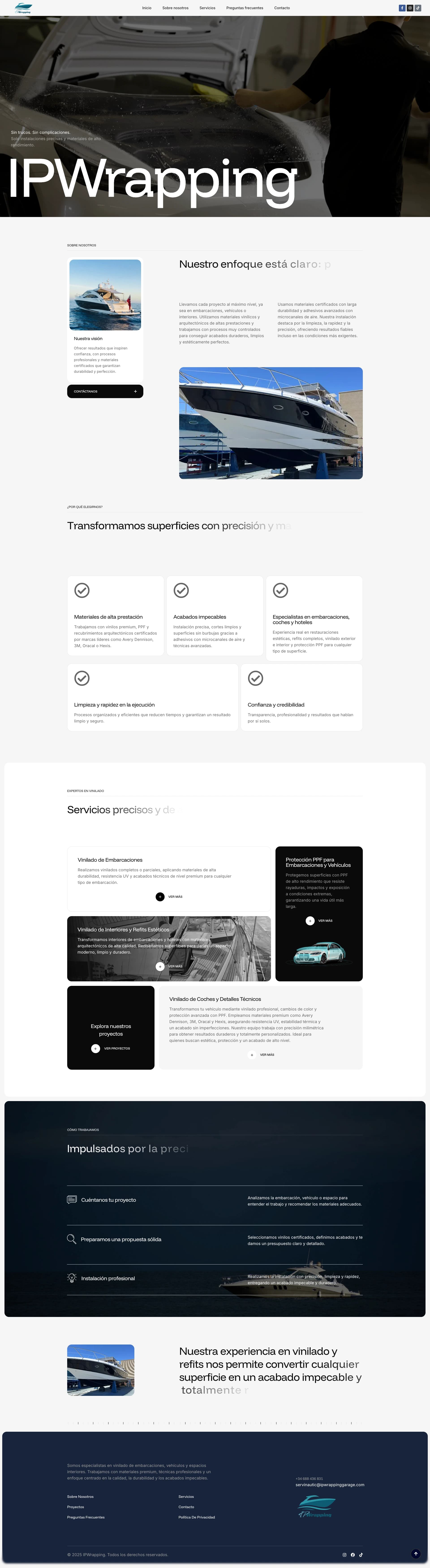
IP Wrapping
Service website design organising marine wrapping, vehicle protection and interior finishes around applications, process and contact.
View case study